Written by the Dyallok Hotel & Resort team — Umapur, Bhagwanpur, Kaimur · Published September 2026
Quick answer
Shardiya Navratri 2026 runs from Sunday, October 11 (Ghatasthapana) to Tuesday, October 20 (Vijayadashami).
Maa Mundeshwari Temple holds a large annual mela during this period, and the temple stays open through the night on Ashtami (October 18).
The shrine draws an estimated 12 to 14 lakh visitors a year, with Navratri, Ram Navami and Shivratri accounting for the sharpest spikes — book accommodation now, not in October.
If you are planning a Navratri darshan at Mundeshwari, the practical questions matter more than the spiritual ones once you are actually on the road: which day is worst for crowds, does the temple really stay open all night, and will you find a room within reach of the hill. This guide answers those questions directly, using confirmed 2026 dates and what we see from guests every festival season.
Shardiya Navratri 2026: Confirmed Dates
Multiple Panchang sources converge on the same window this year, which is not always the case.
| Date (2026) | Day | Significance |
| October 11 | Sunday | Ghatasthapana (Kalash Sthapana) — Navratri begins |
| October 16 | Friday | Saptami |
| October 17 | Saturday | Maha Ashtami |
| October 18 | Sunday | Ashtami continues / Kanya Pujan — temple traditionally stays open through the night |
| October 19 | Monday | Maha Navami |
| October 20 | Tuesday | Vijayadashami (Dussehra) — Navratri concludes |
A note on tithi timings
Ashtami and Navami dates can shift by a day depending on which Panchang and which region’s convention is followed, and Ghatasthapana muhurat is time-bound within the morning window on October 11. If your visit is built around a specific ritual day, confirm the exact tithi timing with the temple trust close to your travel date rather than fixing plans months in advance.
Why Navratri Matters So Much at This Particular Temple
Mundeshwari is a Devi temple even though Shiva occupies the central sanctum — the presiding deity is Mundeshwari herself, worshipped as a form of Durga, which makes Navratri the single most significant festival window on the temple’s calendar. Regional sources place annual footfall at the temple at roughly 12 to 14 lakh visitors, and Navratri, along with Ram Navami and Shivratri, accounts for the sharpest concentration of that traffic.
A dedicated mela sets up near the temple for the duration of the festival, with a market complex, food stalls and, in recent years, lighting installed along the hill road specifically to manage the night-time crowd. On Ashtami, the temple is reported to remain open through the night — a detail many pilgrims travel from Varanasi and Patna specifically to experience, since not every Devi temple in the region keeps this practice.
The bloodless goat sacrifice ritual this temple is known for year-round becomes considerably more visible during Navratri, when devotees bring offerings in greater numbers as part of Kanya Pujan and Ashtami rites.
Day-by-Day: What to Expect
October 11 — Ghatasthapana
The quietest day of the festival at the temple itself, though roads into Kaimur begin filling as out-of-town devotees arrive early. A good day for darshan if your priority is a calm visit rather than the festival atmosphere.
October 16–17 — Saptami and Maha Ashtami
Crowds build sharply. Parking at the hill-base fills earlier than usual, and the queue for darshan lengthens through the afternoon.
October 18 — Ashtami night and Kanya Pujan
The peak of the festival. This is the night the temple is reported to stay open continuously, and it draws the heaviest single-day crowd of the year alongside Navami. If you want to experience the overnight vigil, plan for serious congestion on the hill road and very limited parking. If you would rather avoid it, this is the one day to schedule around.
October 19 — Maha Navami
Still heavily crowded, with many families choosing this day over Ashtami specifically because it is marginally calmer while still carrying full festival significance.
October 20 — Vijayadashami
Crowds thin from midday onward as the festival winds toward Dussehra. A reasonable day for a lower-key darshan if you are travelling on shorter notice.
Planning Your Visit: Five Practical Decisions
- Pick your crowd tolerance first. Ghatasthapana or Vijayadashami for a calmer visit; Ashtami or Navami for the full festival experience and the overnight vigil. Decide this before you book anything else — it determines almost every other choice below.
- Book your room now, not in October. Properties within realistic driving distance of the hill fill during the first week of the festival every year. Waiting until early October typically means a much longer drive back after darshan, in festival traffic, after dark.
- Drive up, don’t climb, on peak days. The roughly 500-step staircase is manageable on a quiet day. On Ashtami or Navami, with the crowd density that builds on the stairs, driving to the upper parking area and taking the short final flight is the safer choice for families, elderly visitors and small children.
- Carry water and cash. Mela stalls sell food and puja items, but the region has real water scarcity and card acceptance thins out fast once you’re off the highway. Carry both.
- Build in slack for the return drive. Festival traffic on the Bhabua–Chainpur–Ramgarh road moves far slower than the 15–20 minutes it takes on a normal day. Do not schedule a train or flight for the same evening as an Ashtami darshan.
Where to Stay During Navratri
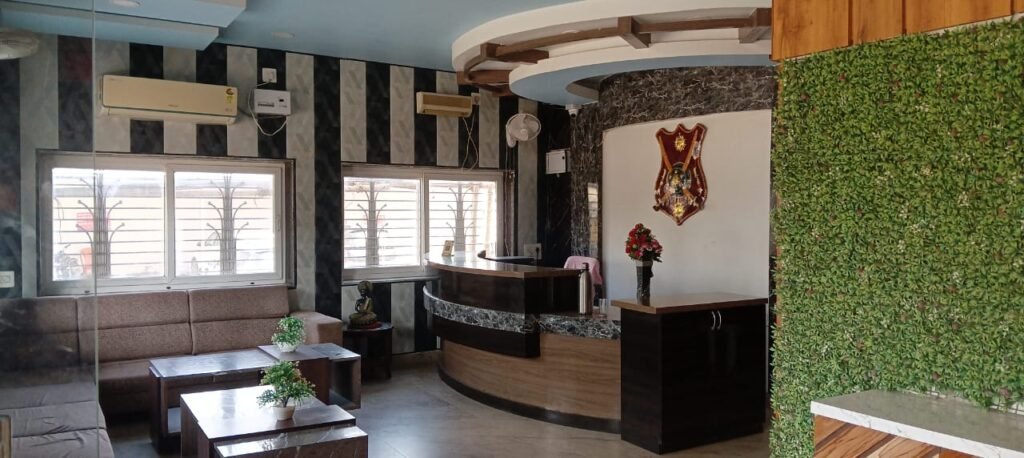
There is no lodging at the hilltop, and the handful of guest houses at the base fill fastest of anywhere on the route once the festival dates are public. Bhagwanpur and Bhabua remain the two practical bases. Our own property, Dyallok Hotel & Resort, sits about 6.5 km from the temple in Umapur, Bhagwanpur, with rooms from ₹1,500 and a banquet-scale kitchen that keeps serving through festival volume when smaller lodges’ food service falls behind. See current room availability or read our full comparison of what to look for in a hotel on this route.
If you are combining darshan with a wider trip, our guide to the Mundeshwari climb and timings and our district-wide guide to Kaimur’s waterfalls and forts are both worth reading before you travel — Navratri week is a reasonable time to add a quieter second day once the festival crowd has thinned.
Getting There During the Festival
Bhabua Road (Mohania) remains the nearest railhead, and road access from Varanasi, Patna and Sasaram is unchanged — the difference in October is volume, not route. Groups travelling from Varanasi or further afield often prefer a pre-booked vehicle for festival dates specifically because shared transport options tighten as demand rises; platforms such as InDiscover list fixed, all-inclusive fares for outstation cabs and Tempo Travellers on the Varanasi corridor, which removes the price uncertainty that usually creeps in during peak pilgrimage weeks.
Beyond Navratri: The Temple’s Other Big Dates
If Navratri crowds are more than you want but you still want festival energy, two other dates are worth knowing:
- Mundeshwari Mahotsava, April 7–8 — an annual cultural celebration with regional artists performing, generally lighter on religious crowding and heavier on cultural programming.
- Shivratri and Ram Navami — both draw large crowds specifically because Mundeshwari houses both a Shiva lingam and the Devi, giving it double significance most single-deity temples don’t carry.
Frequently Asked Questions
What are the Navratri 2026 dates at Mundeshwari Temple?
Shardiya Navratri 2026 runs from Sunday, October 11 (Ghatasthapana) to Tuesday, October 20 (Vijayadashami), based on the Panchang calendar.
Does Mundeshwari Temple stay open all night during Navratri?
Yes, the temple is widely reported to remain open through the night on Ashtami, which falls on October 17–18, 2026.
Which day has the biggest crowd at Mundeshwari during Navratri?
Ashtami and Navami (October 17–19) see the heaviest footfall. Ghatasthapana and Vijayadashami are comparatively calmer.
Is it safe to visit Mundeshwari Temple during Navratri with elderly family members?
Yes, provided you drive to the upper parking area rather than using the full staircase, which gets very congested on peak days.
How far in advance should I book a hotel for Navratri at Mundeshwari?
As early as possible. Properties near the temple, including guest houses at the hill base, fill within the first week the festival dates are confirmed each year.
How many people visit Mundeshwari Temple during Navratri?
The temple draws an estimated 12 to 14 lakh visitors annually, with Navratri, Ram Navami and Shivratri accounting for the largest single-period spikes.
About the author
Written by the on-ground team at Dyallok Hotel & Resort, Umapur, Bhagwanpur, Kaimur — operating on the Mundeshwari route since 2012 (formerly Anand Lok). Crowd patterns and booking-lead-time observations reflect what we track internally across previous festival seasons.
Festival dates are drawn from published Panchang calendars for 2026; historical footfall and mela details are drawn from Bihar heritage and tourism sources and the Kaimur District Administration portal (kaimur.nic.in). Tithi timings can shift by a day depending on regional convention — confirm close to your travel date.
Digital strategy, technical SEO and content structure by mediamafia- Media Mafia
For Navratri room availability, call +91-9973426835 or email dyallok2021@gmail.com — we recommend booking at least two to three weeks ahead of your chosen darshan date