Written by the Dyallok Hotel & Resort team — Umapur, Bhagwanpur, Kaimur · Updated September 2026
| Quick answer
Maa Mundeshwari Temple sits at 608 feet on Pawara (Mundeshwari) Hill in Kaimur district, Bihar, and is widely described as the oldest functioning Hindu temple in the world — worship here has never been interrupted. Darshan is generally available from around sunrise to sunset, entry is free, and the temple is roughly 12 km from Bhabua, 22–25 km from Bhabua Road (Mohania) railway station, and 100–120 km from Varanasi. Reaching the shrine means either a 500-plus step climb or a narrow hill road to a parking area near the top, followed by a short flight of stairs. |
Most guides to this temple stop at two lines: it is very old, and it is in Bihar. That leaves out everything a visitor actually needs — when the gates open, how long the climb takes, whether an elderly parent can manage it, what the sacrifice ritual really involves, and what else is worth seeing once darshan is done.
We run a hotel roughly 6.5 km from the foot of the hill, and we answer these questions for guests almost every day. This guide collects those answers in one place, with the honest caveats that a temple this old deserves.
Why This Temple Matters: The Dating Debate Nobody Explains
You will see Maa Mundeshwari Temple described as 108 AD, 389 AD, 625 CE and “over 2,000 years old” — often on the same page. These are not typos. They come from different kinds of evidence, and knowing which is which makes the visit far more interesting.
| Claimed date | Where it comes from | What it actually proves |
| 108 AD | Archaeological Survey of India dating of the structure | Often cited as the basis for the ‘oldest functional temple’ claim |
| 389 AD | An inscription recorded at the site | Places the temple firmly within the Gupta era |
| 625 CE | An information plaque at the temple | A conservative floor — the temple is at least this old |
| 635 CE | Hindu inscriptions found at the temple | Evidence of established, documented worship |
The temple has been a protected monument under the ASI since 1915. British surveyors including Francis Buchanan and Bloch documented the site between 1812 and 1904, and inscription fragments found in 1891 and 1903 are now held at the Indian Museum in Kolkata.
What is not disputed: the temple is built on a rare octagonal plan, is regarded as the earliest surviving example of Nagara-style temple architecture in Bihar, and has never gone dark. That last point is the real claim to fame. Older temple structures exist. A temple where the lamp has stayed lit without a break for well over a millennium is a different thing entirely.
What You Will See Inside
The shrine is compact, so knowing what to look for matters more here than at a sprawling temple complex.
- Maa Mundeshwari in her Varahi form — the main idol, in the eastern section, depicted with Mahish (buffalo) as her vehicle.
- The Panchmukhi Shivling — installed at the centre. Devotees and guides describe the stone as changing colour through the day as the angle of sunlight shifts. It is a genuine optical effect worth timing your visit around.
- The large Nandi — on the west side of the main entrance.
- Four entrances — one now closed, one half-open, an architectural detail unusual enough that scholars still discuss it.
- Scattered ruins — broken sculpture and stonework lie around the hilltop, remnants of what researchers believe was a much larger religious and educational settlement.
Photography is not permitted inside the sanctum. You can photograph the exterior and the views, which on a clear morning stretch a long way across the Kaimur plateau.
The bloodless sacrifice
Mundeshwari is known for a ritual found almost nowhere else. A goat is presented before the goddess, mantras are chanted, the animal falls unconscious — and is then revived with further mantras and released alive. No blood is shed. Whatever your beliefs about the mechanism, the tradition is real, documented by the district administration, and central to how local devotees understand this shrine.
Darshan Timings and Aarti
Timings at Mundeshwari follow the sun rather than a fixed clock, which is why published sources disagree. The pattern most consistently reported is:
| Activity | Typical timing |
| Temple opens | About 30 minutes before sunrise |
| Midday break | Around noon to 12:20 PM |
| Manokamana aarti | Approximately 11:30 AM – 12:00 PM |
| Shringar aarti | About 30 minutes before sunset |
| Temple closes | At sunset |
| Entry fee | Free (a paid VIP darshan option is commonly reported) |
| Please verify before you travel
Timings shift with the season, and they change during Navratri, Ram Navami, Shivratri and the annual fair. Some sources list a 6:00 AM–7:00 PM window instead. Confirm with the temple trust or your hotel a day before you travel rather than relying on any single website — including this one. |
How to Reach Maa Mundeshwari Temple
The temple sits about 10–12 km south of Bhabua town, reached via a detour after Chainpur that leads to the base of the hill.
By train
Bhabua Road (station code BBU), at Mohania, is the nearest railhead — roughly 22–25 km from the temple. It sits on the Grand Chord line with five platforms and over 70 trains passing daily, which makes it genuinely well connected to Delhi, Kolkata, Patna and Gaya. From the station, take an auto or taxi to the temple, or a bus to Bhabua and a tempo onward. Pandit Deendayal Upadhyaya Junction (Mughalsarai) is about 54 km away and offers far more train options if BBU has no convenient service.
By air
Lal Bahadur Shastri International Airport at Varanasi is the nearest airport, commonly listed at roughly 100–133 km depending on the route taken. Gaya Airport is an alternative at about 92 km.
By road
| From | Approx. distance | Typical drive time |
| Bhabua town | 10–12 km | 20–30 minutes |
| Bhabua Road / Mohania station | 22–25 km | 45–60 minutes |
| Varanasi | 100–120 km | 2.5–3 hours |
| Sasaram | Approx. 60 km | 1.5 hours |
| Patna | Approx. 200 km | 4.5–5 hours |
National Highway 30 connects Kaimur to Patna via Arrah, and the district sits close to NH-19, so self-drive and taxi access is straightforward. Families and groups arriving from Varanasi, Patna or Ayodhya often prefer a pre-booked vehicle for the day rather than changing between buses and autos — platforms such as InDiscover list transparent, all-inclusive fares for outstation cabs and Tempo Travellers on these corridors, including the Varanasi pilgrimage routes that most Mundeshwari visitors travel in on.
The Climb: What to Actually Expect
This is the single most under-explained part of the trip, and the part that decides whether an older relative enjoys the day or endures it.
- By vehicle: A narrow, steep road climbs from the base to a parking area near the top. From there it is only a short flight of stairs to the temple. Parking is an open, unmarked space and jams badly on festival days and weekends.
- On foot: A covered staircase of roughly 500–530 steps runs from the base. Allow 15–30 minutes depending on fitness. The covering helps considerably in summer.
Shops selling puja samagri — flowers, incense, sweets — cluster at the base, along with a forest entry post. Buy your offerings there rather than carrying them from home.
| Practical notes from guests who stay with us
Carry your own drinking water. The hilltop has limited facilities and water is scarce in this region. Come early. A 7–8 AM darshan avoids both the crowd and the heat, and the light on the plateau is at its best. Remove footwear before entering, dress modestly, and keep noise down during prayers. Travelling with elderly parents or small children? Drive up to the parking area — do not attempt the full staircase. Avoid peak Navratri days if you want an unhurried visit. The annual fair draws thousands. |
Best Time to Visit
October to March is the clear winner. The weather is comfortable for the climb, visibility across the plateau is good, and post-monsoon water levels make the nearby waterfalls worth adding to the trip. Ram Navami and Shivratri carry special significance here, and Navratri brings a large annual fair — spiritually the richest time to come, and logistically the hardest. Summer is manageable only with an early start; the hilltop offers little shade beyond the temple itself.
Make It a Two-Day Trip: What Else to See in Kaimur
Most visitors treat Mundeshwari as a three-hour stop and drive away. That is a missed opportunity — Kaimur has some of Bihar’s best-kept natural sites, and almost all of them are within an hour of the temple.
- Karkatgarh Waterfall (approx. 42 km from Bhabua, Chainpur block) — a 300-foot-wide, 100-foot-high fall on the Karmanasa River. Once a crocodile-hunting ground for Mughal rulers and British officials, it is now part of Kaimur Wildlife Sanctuary and is being developed as a crocodile conservation reserve and eco-tourism site.
- Telhar Kund (approx. 31–32 km from Bhabua) — an 80-metre waterfall on the Rohtas plateau near the Durgavati river, ending in a pool popular with picnicking families.
- Karamchat Dam / Durgavati Reservoir — a calm, hill-ringed reservoir close to Telhar, good for a slow afternoon and photography.
- Kaimur Wildlife Sanctuary — established in 1979 and the largest sanctuary in Bihar, with sal and bamboo forest, leopards, deer and strong birdwatching.
- Shergarh Fort and the prehistoric rock shelters — forest ruins and cave paintings that place this landscape thousands of years before the temple was ever built.
A workable plan: darshan at sunrise on day one, Karkatgarh and the sanctuary through the afternoon, an overnight stay in Bhagwanpur, then Telhar Kund and Karamchat Dam on day two before heading back.
Where to Stay Near Maa Mundeshwari Dham
There is no lodging at the hilltop itself, and options directly at the base are limited to basic rooms with little food service. Most visitors base themselves in Bhagwanpur or Bhabua and drive up.
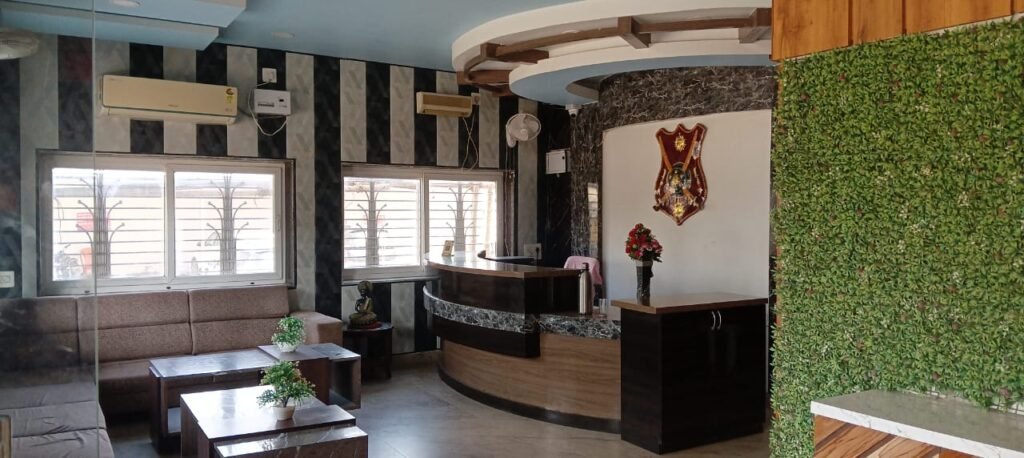
Our own property, Dyallok Hotel & Resort, sits about 6.5 km from the temple in Umapur, Bhagwanpur, with AC rooms from ₹1,500, temple-view balconies, an on-site restaurant and a banquet hall for larger family groups. We wrote a detailed, price-by-price comparison of what to look for in a hotel on this route here: Best Hotel Near Maa Mundeshwari Dham, Kaimur. You can also check live availability on our accommodations page or browse the Kaimur tourism places we help guests plan around.
Whichever hotel you choose, book ahead during Navratri. Rooms within striking distance of the temple fill early, and the alternative is a long drive back to Varanasi after dark.
Frequently Asked Questions
Is Maa Mundeshwari really the oldest temple in the world?
It is widely described as the oldest functioning Hindu temple, meaning worship has continued here without interruption. Older temple structures exist elsewhere; the distinction is continuous, unbroken worship, supported by ASI dating and inscriptions found at the site.
How many steps are there to Mundeshwari Temple?
Roughly 500 to 530 covered steps from the base of the hill. Visitors who drive up to the parking area near the summit face only a short flight of stairs instead.
What are the Mundeshwari Temple darshan timings?
The temple typically opens about half an hour before sunrise and closes at sunset, with a short midday break around noon. Timings shift seasonally and during festivals, so confirm locally before travelling.
How far is Mundeshwari Temple from Varanasi?
Approximately 100 to 120 km by road, usually a 2.5 to 3 hour drive. Varanasi airport is the nearest airport for visitors flying in.
Is there an entry fee?
General darshan is free. A paid VIP darshan option is commonly reported; check with the temple trust for current arrangements.
Can elderly visitors manage the temple?
Yes, provided they travel by vehicle to the upper parking area, which reduces the walk to a short flight of stairs. The full staircase is demanding and is not recommended for those with mobility or cardiac concerns.
What is the best time of year to visit?
October to March offers the most comfortable weather. Navratri, Ram Navami and Shivratri are the most spiritually significant but also the most crowded.
Plan Your Darshan With Us
Dyallok Hotel & Resort has hosted pilgrims and families on the Mundeshwari route since 2012. For room availability, group bookings or help planning a two-day Kaimur itinerary, call +91-9973426835, email dyallok2021@gmail.com, or visit us at Maa Mundeshwari Betri Road, Umapur, Bhagwanpur, Kaimur (Bhabua) – 821102, Bihar.